
October 4, 2025
In Conversation with Olajide Ayeni
Over the past few months, we at Grafiki have been studying different types of Afrikan architecture, and this led us to Ọlájídé Ayẹni.
Ọlájídé Ayẹni is a media artist who shares stories about the built environment and its impact on people. His practice combines architecture and documentary photography, frequently documenting urban change and how it affects those who live and work near sites of action, construction, or destruction.
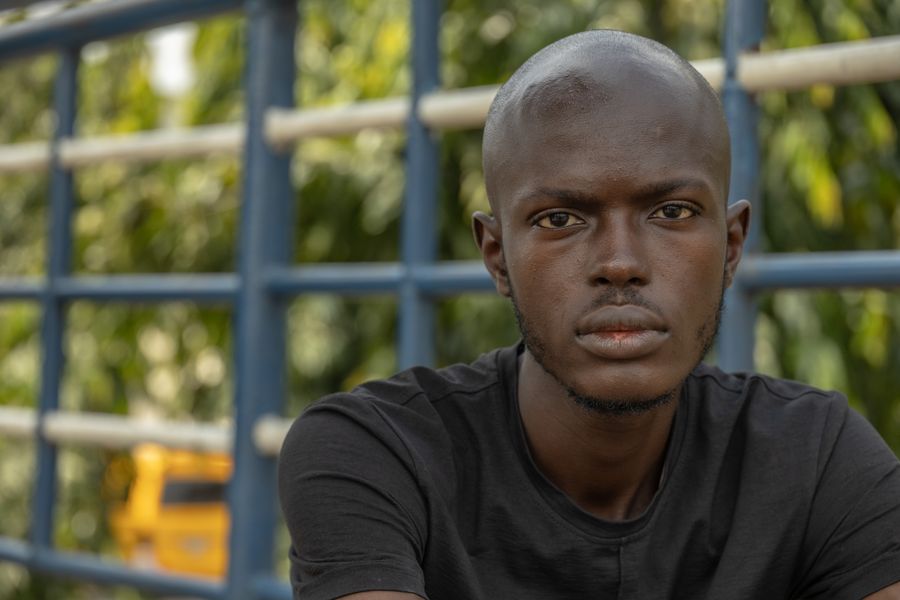
Olajide Ayeni by Oyewole Lawal / Grafiki Studio, August 2025
Shifting from Architecture to Photography
AmaraChíkà: Okay, let’s start lightly. My favourite food is French fries. I know, not very Nigerian.
Olajide: (Laughs) Well, even the way we eat says something about our values and our systems of living. Food really reflects culture.
AmaraChíkà: True. For me it’s comfort food—something I reach for when I just want to relax. Anyway, let’s not waste time. Let’s dive in.
With your background in architecture, I’m curious: what made you shift towards photography and visual storytelling as your main medium? There are so many things you could have pursued within architecture, so why this path?
Olajide: People often ask me if I still practise architecture, and my answer is yes. It might not be in the traditional sense, but I do.
For me, architecture has always been about process—the process of making, the “behind-the-scenes” of how things come to be. Even earlier in my life, I was fascinated by processes, which is partly why I once considered studying science. In retrospect, that interest in processes connected me deeply with photography.
For example, while studying architecture in UNILAG, I didn’t always enjoy going to construction sites—except when I had my camera. I found myself drawn to photographing construction progress. Through that, I was learning, observing, and asking questions.
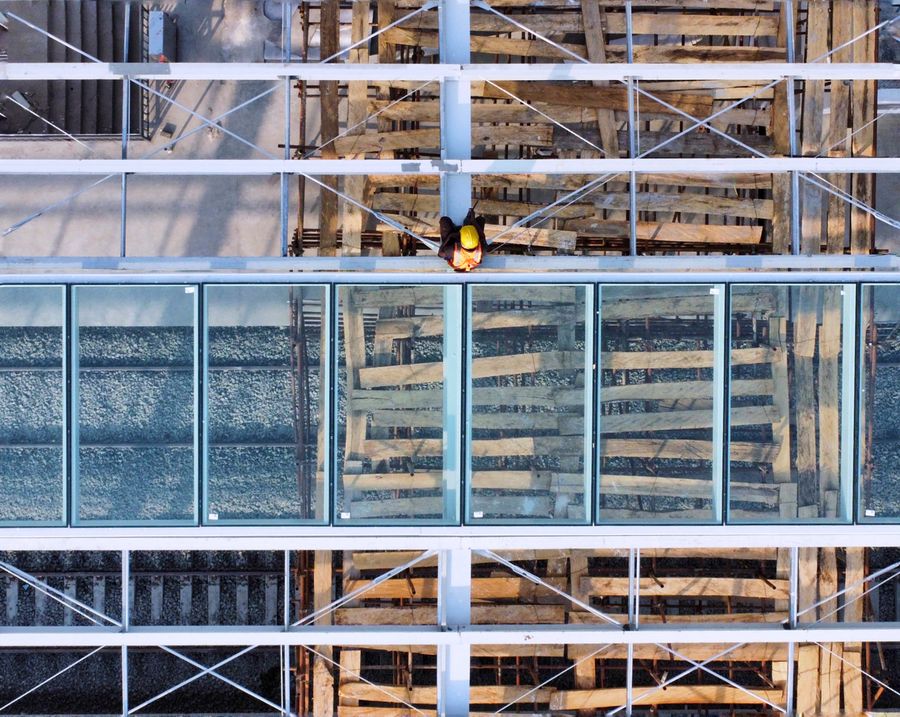
Aerial photo of a worker atop the roof of the Marina Train Station, Lagos, during construction. November 2022.
At the same time, I grew up with art around me. My father encouraged me to draw and taught me different shading techniques, and he was also pretty good with handcrafts and design. In secondary school, I also studied art. Architecture itself is both art and science, so it made sense to me.
I was always sketching or modelling with cardboard, paper, clay, or sand. So the artistic practice has always been there—it just merged naturally with photography.
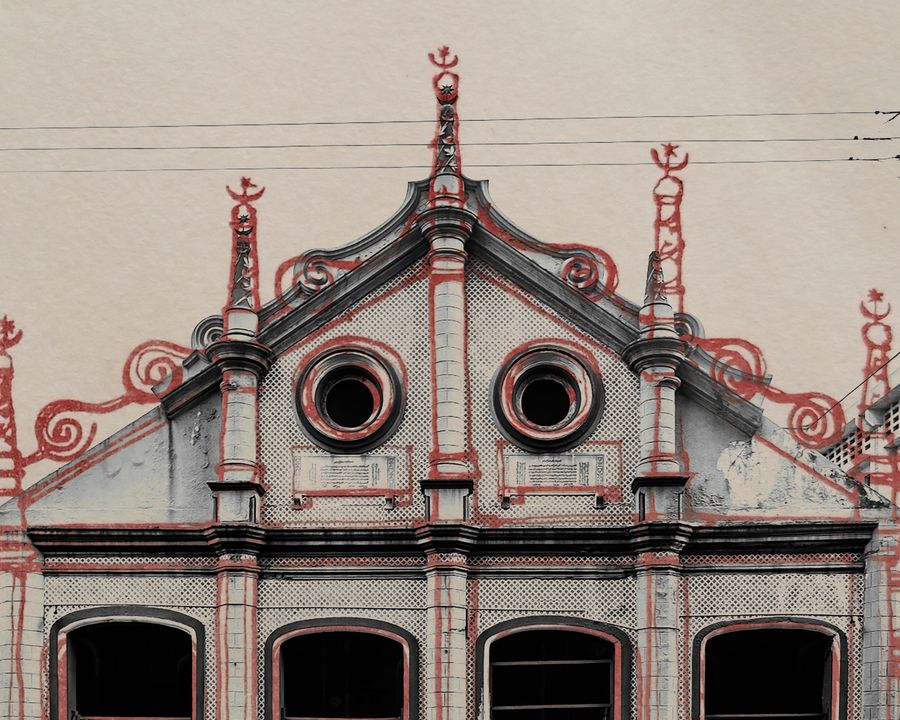
Shitta Bey (Mosque) In A Time Continuum (60s vs 2017) — Double exposure photograph, 2024. Marina, Lagos.
Spaces and Environments
Born and raised first in Palmgrove and later in Ikorodu, Ọlájídé’s surroundings have always been central to his practice. Architecture is the lived texture of our world, and this shaped how he saw the built environment. Reflecting on his time at architecture school, he recalls how deeply background and environment influence design:
Olajide:
“I remember in my first year of architecture school, we had a design studio project where we were asked to design a three-bedroom residential home.
One of my classmates presented a design of a floating house, inspired by Makoko, where he grew up. At the time, some people laughed at him, but it struck me deeply. It made me realise how much our environments influence the way we design.
Looking back now, I can see how a person’s background, their socio-economic class, and their lived experience—all of that shows up in how they think about space and design. That floating house was more than a drawing; it was a reflection of lived reality.”
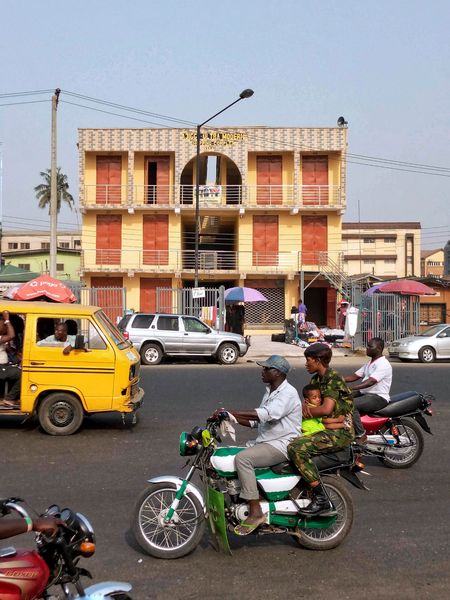
Shopping complex with people in vehicles and motorcycles in the foreground. Yaba Market, Lagos. December 2018.
For Ọlájídé, that lesson extended beyond school, expanding how he thought about space.
Olajide:
“Personally, I also drew inspiration from my environment. As a child, I was always sketching buildings or modelling small houses. I’d look at my surroundings and imagine new forms.
The ‘white box’ architecture that was hard to imagine as a kid later became something I could engage with conceptually.
Travel also shapes the way we think about design. Sometimes physical travel, but also travel through visuals—films, images, gestures. It all broadens your mind and feeds your imagination.
So yes, spaces and places are central to how I work. They don’t just exist as backdrops; they actively shape how we live and create.”
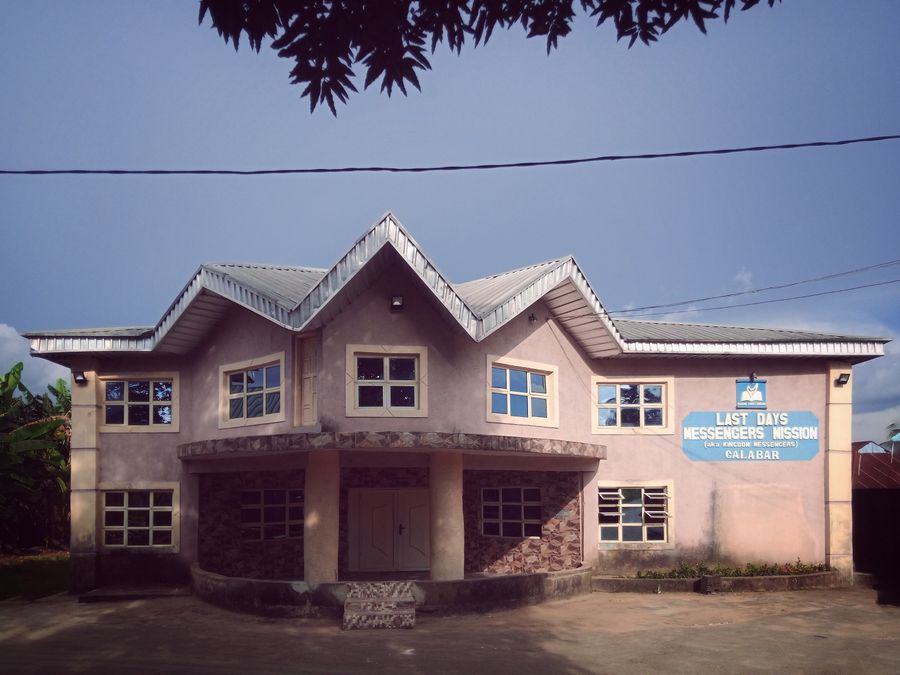
Last Days Messengers Mission Church. Ikot Ansa, Calabar, Cross River. October 2020.
Memory and Change
Olajide’s lens often finds beauty and resilience in transition.
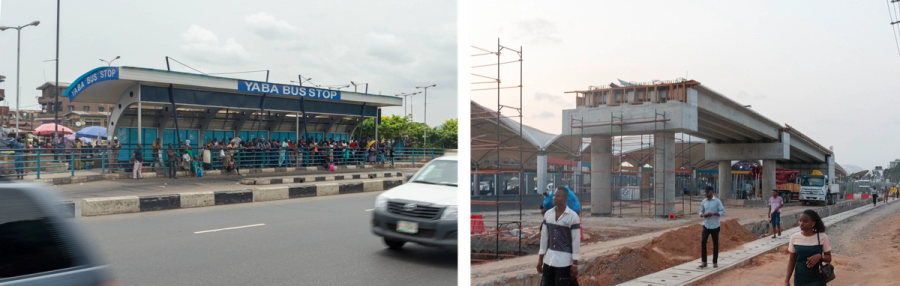
Yaba Bus Stop, Yaba, Lagos — 2016 & 2022.
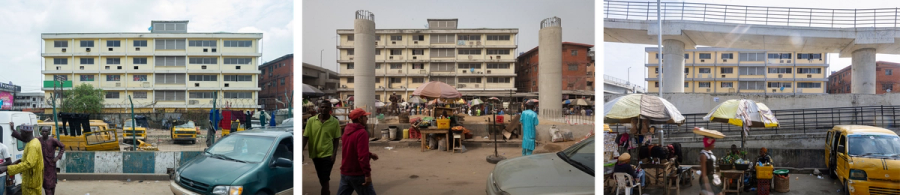
Yellow Storey Building, Yaba Market, Lagos — 2017, 2023 & September 2025.
Ayeni's series If Demolition Could Be Colourful began in 2017, when Lagos State expanded the Isawo–Owutu Road in Ikorodu.
Olajide:
“Initially, it began to see if there was some form of ‘visual hope’ for residents who lost parts of their homes and properties to demolition…”
The series grew into a larger project that investigated how urbanisation and large-scale infrastructure influence people's lives through stories of displacement, adaptation, and endurance.
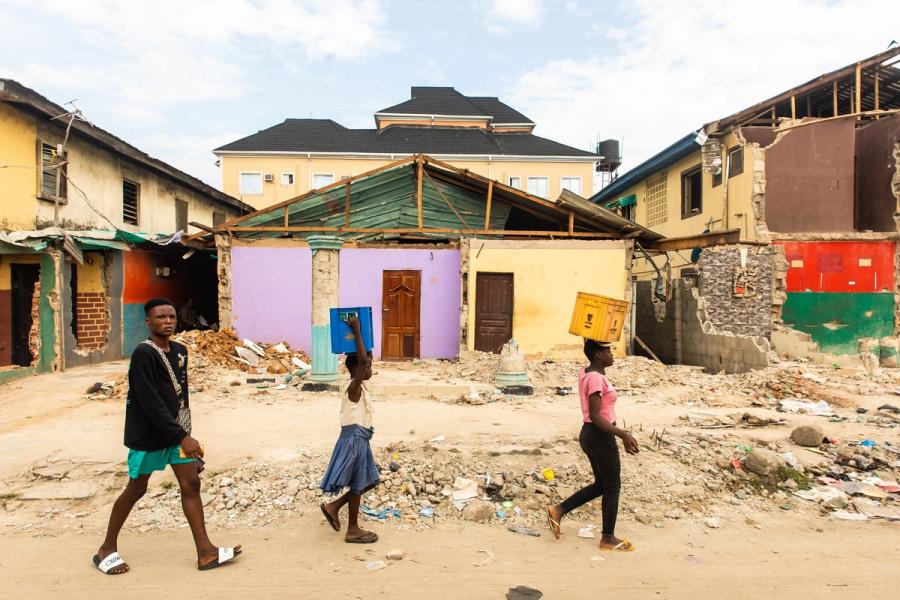
Make Way For Me, I. Mushin, Lagos. 2022.
On Recognition and Continuity
In 2024, Ọlájídé received the Prince Claus FELLOWS Award. When asked what it meant, he explained:
Olajide:
“Thank you. Honestly, for me personally, the award is less about validation and more about opportunity.
But for my family, it has meant proof of concept—evidence that the work I’m doing matters and has value. For my community, it also serves as an example, showing younger creatives that it’s possible to build a life through art, photography, and storytelling—even in Nigeria, where the arts are often undervalued.”
Beyond recognition, the fellowship provided the means to sustain his ongoing documentation of cities in flux.
Olajide:
“Practically, the fellowship allows me to continue my work. It means I don’t have to constantly worry about survival—what I’ll eat, how to pay rent—and can focus more on the projects that matter.
For instance, I’ve been working on documenting Lagos infrastructure projects and their impact on people’s lives. This fellowship helps me sustain that.
It also provides resources. At one point, my camera had broken down, and I relied on my phone or borrowed equipment. With the fellowship, I could replace tools and keep working. That matters.
So in essence, the award isn’t about prestige—it’s about continuity. It allows me to keep contributing, keep telling stories, and keep taking pictures that preserve the memory of our built environment.”
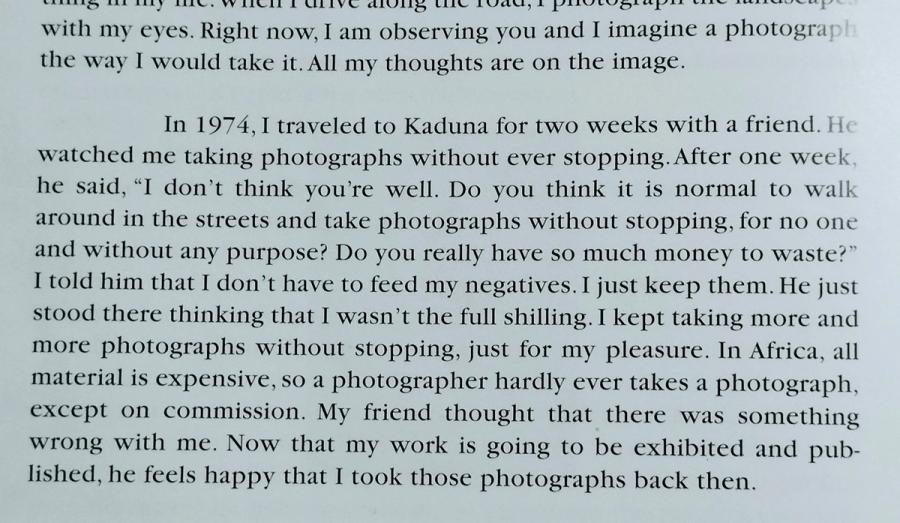
Late Okhai Ojeikere recalls a conversation with a friend from the book “J. D. 'Okhai Ojeikere: Photographs”, published in 2000, edited by André Magnin / Scalo.
AmaraChíkà: That’s beautiful. Thank you so much for your time, Olajide.
Olajide: Thank you.