
September 26, 2025
How Design Captures Photography
Editor’s Note
This month at Grafiki, we’re reflecting on the deep, often unspoken relationship between photography and design, how the latter frames the world and the former captures it. We are examining how visual storytelling is influenced by our ability to organise, interpret, and give meaning to what we see.
In that spirit, we reached out to Oyewole Lawal, a photographer, sociologist, recipient of the Eugene Smith Fund Student Award in 2023, and the Artworks Projects Emerging Artist of 2024, to share his thoughts. His art oscillates between image, emotion, memory, and meaning.
This piece is a personal micro essay that reflects his thoughts on how design structures visual storytelling. Oyewole's voice, which is unfiltered, instinctive, and purposeful, has been preserved because that too is part of the story.
How Design Influenced My Photography
My father, an engineer, was constantly sketching designs when I was growing up. I remember him with rulers, clean lines, and shapes, drawing engine parts or faces with this quiet precision. That was my first real introduction to design: not through museums or textbooks, but in how he made structure make sense.
Naturally, I sketched too in secondary school, but when I discovered photography, I became fascinated by how photographers saw shapes, colour, and even imbalance. That curiosity shaped my eye.
Now, as a photographer, I often compose with design principles in mind. I think in balance, lines, and rhythm. I see the bustling streets as compositions of intersecting lines, my story, my life, repeating patterns, and dynamic movement. The Lagos skyline, the arrangement of market stalls, or even the chaos of a busy bus park can be interpreted as a well-designed visual. Design is everywhere.
However, for me, the story always leads. It guides how I frame, light, and position. In Bachelorhood, I follow the inner worlds of young men in Lagos, exploring themes of masculinity, solitude, and becoming. In Guardian of Gaia, I document the quiet labour of waste miners — unseen custodians who protect the land in silence. In both projects, design is the quiet thread that holds the images together, letting the stories breathe while giving them structure.
Photography as a Design-Oriented Art Form
Photography, like design, relies on visual composition. They share the same grammar: balance, contrast, symmetry, rhythm, movement, and proportion.
A photograph is a carefully constructed frame where elements are arranged to resonate, and, like a poster or textile print, a photograph also takes into account the interactions between its visual elements.
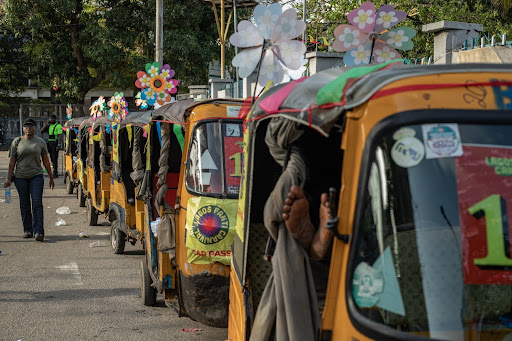
Lagos Fanti Festival by Oyewole Lawal
Lines guide the eye in design and photography—drawing attention to a subject. These leading lines affect character positioning within a frame, playing an important role in directing the viewer’s focus and creating a sense of flow, depth, and layering to the story.
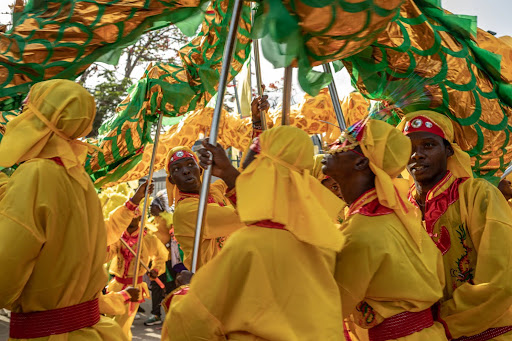
Lagos Fanti Festival by Oyewole Lawal
Colour sets mood. Whether I’m working with the soft, earthy tones of Lagos or the saturated fabrics in Accra, I grade colour to change the emotional texture of the image, altering how it feels when you look at it.
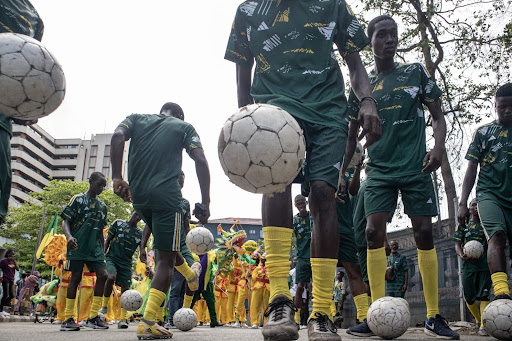
Lagos Fanti Festival by Oyewole Lawal
Rhythmic repetition brings balance. Like patterns in design, visual echoes in a photo — the repetition of form, texture, or gesture — build structure into a moment.

Tarkwa Bay by Oyewole Lawal
Minimalism, too, matters. Negative space can turn a quiet portrait into something powerful. When the background falls away, all you have is the subject — their gaze, their breath, their presence.
Design is culture. It’s how we’ve always expressed meaning. Before the camera, before typography, our ancestors encoded knowledge into symbols — the Adinkra of the Akan, the Nsibidi ideograms of the Igbo and Efik. That visual instinct still flows through us.
You see it in our woven textiles, in the architecture of old towns, and in the way we braid hair or arrange market spaces. We design even when we don’t call it that. Design is a living language.
Photography and design are deeply interconnected; they require an understanding of form, balance, rhythm, and intention. As Afrikans, we are shaped by this visual tradition. And by incorporating design thinking into our photography, we honour that legacy while telling new stories.
Edited by AmaraChika Emele-Ralph
Design by Adeoluwa Henshaw